
Media monitoring
- Follows a whole topic.
Month to month. Cancel any month. See pricing
Brand monitoring means watching one thing very closely, your own name.
That includes the founder who gives interviews and every product with its own name.
The mentions sit in press stories and Reddit threads, and lately in the answers AI assistants give. Finding mentions is easy.
Finding only yours takes work. Pocket PR runs it as part of media monitoring in the Growth plan, from $890 a month.
Illustration
Brand monitoring is the narrow cousin of media monitoring, built around your own name.
For a startup its value is early warning, because a first critical review or a wrong AI answer is small when it appears and grows when nobody answers.
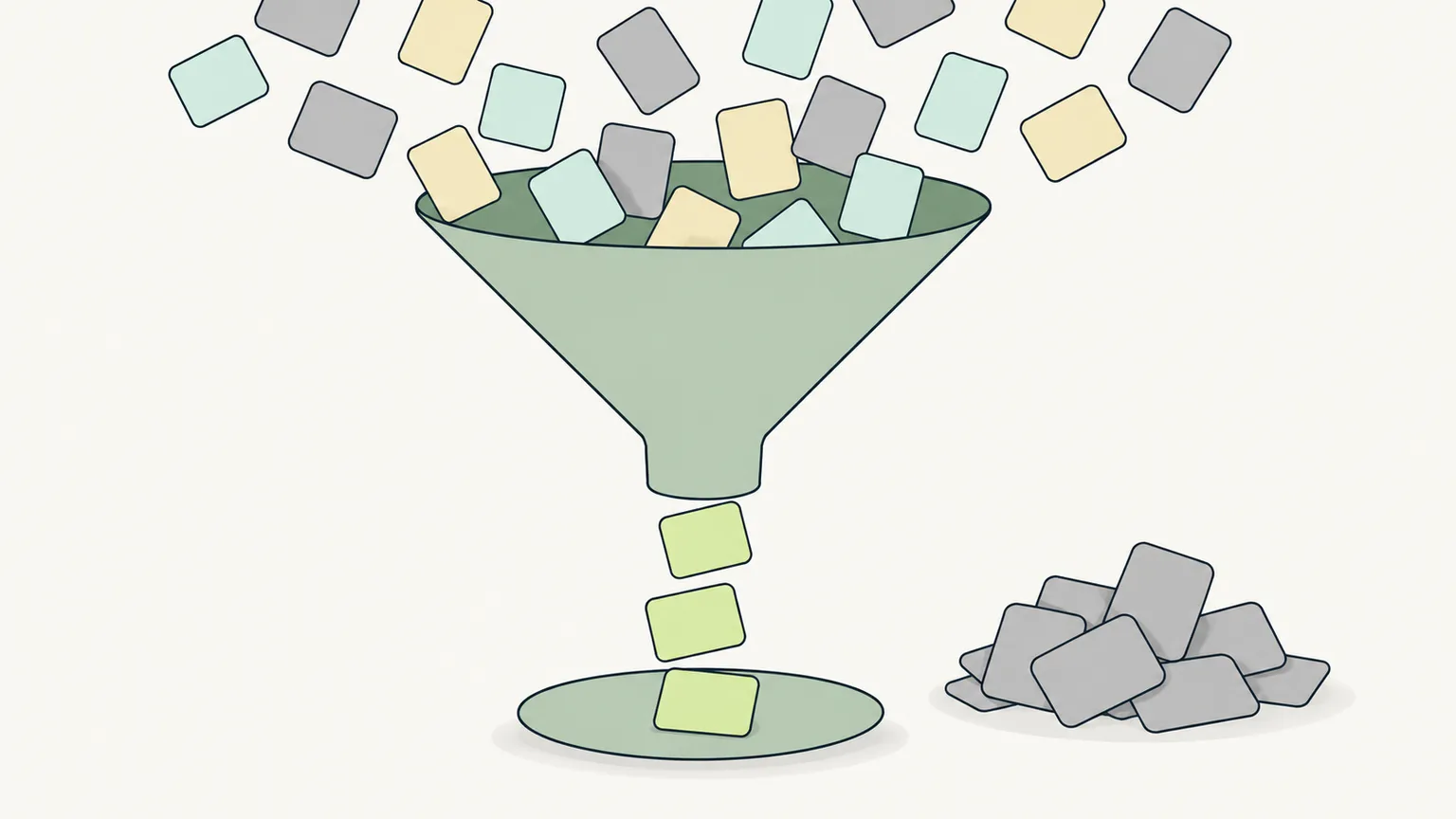
Most tools match text, so a name that is also an ordinary word matches every use of that word.
Brands called Mention or Pocket share their names with everyday words.
Left raw, such feeds fill with junk, and on plans that cap monthly mentions the junk uses up the quota before real mentions arrive.
Copy and send
A brand passport is a short document that tells the monitoring system what your name looks like in the wild.
It is the single biggest fix for noise, and it takes about an hour.
Here is an illustrative passport for a fictional company called Gridwise.
Brand passport, Gridwise

NAME VARIANTS. Spellings, spacing, transliteration
Gridwise, Grid Wise, the name in Cyrillic

ANCHOR. A signal that proves it is you
gridwise.eu, a founder's full name

PRODUCTS. Product and feature names
Gridwise Clinic Unit

PEOPLE. Founders and spokespeople
Olena Marchenko

NEIGHBOUR WORDS. Words that often sit near your real mentions
backup power, clinic, battery

EXCLUDED WORDS. Contexts that are never you
smart grid policy, electricity grid news
A match counts only with the name plus an anchor or neighbour word and no excluded word. Review the passport after week one and at each launch or new spokesperson.
False positives fall into four groups, each with its own fix.
A person reads every match in the first week and turns each wrong one into a rule.
After that, a weekly spot check is enough for most companies.
Accurate enough to sort, not to decide. Sarcasm reads as praise, and a killer feature reads as hostile.
An outage report that lists several providers can score as an attack on each of them.
Let the model sort the negative pile first and a person write the label that goes into a report.

Most mentions can wait for the morning digest.
An alert should interrupt someone only when delay would cost money or trust, and too many alerts teach a team to ignore them.
Four thresholds cover almost every case.
A short playbook keeps the first answer calm and correct.
If several outlets start asking for comment, it has become a crisis and needs the crisis plan, not this list.
Who wrote it, how far it spread.
A factual error or a customer complaint needs an answer. An opinion usually does not.
Send the editor the correct figure and a source.
Acknowledge, then move to a direct channel.
Arguing doubles the audience.
The same complaint three times is a product issue.
Yes, and often first. At an early company the reporter quotes a person. AI answers then borrow that person's phrasing to describe the product.
Assistants never alert you when they mention you, so the only way to know is to ask them on a schedule.
The full audit method is on AI search visibility, and the free brand mentions check runs a short version for you and a rival.
What a buyer in your category would ask.
In ChatGPT first, then in whichever other assistants your buyers use.
Whether you are named, how you are described, which pages are cited.
Correct the page the answer cites, or earn coverage on sites it trusts.
We write down every spelling of your name and the look-alike words to exclude. You approve that list before anything is collected.
For the first seven days every match is read by hand, and each false hit becomes a new rule, so the feed is clean by week two.
We put your buyers' questions to the AI assistants they use and note whether you are named. If you are, we record which page the answer leaned on.
Illustrative example, not a client result

Anastasiia Bratkova
Chief Brand, Marketing & Communications Officer, RSE
Signs every pitch
Questions
Brand monitoring is tracking where your company and its people are named online, AI answers included, so you can correct a mistake while it is still small.
Set a Google Alert for your name in quotes plus one anchor word. Search Reddit once a week, and once a month ask two AI assistants about your category.
Write ten questions your buyers would ask and run them in ChatGPT every week. Note whether you are named and which sources the answer cites, then repeat the set on Perplexity if your buyers use it.
It handles clear praise and clear anger well. Sarcasm trips it up, and so does neutral news about a bad event. Treat it as a sorting aid, not a verdict.
No. Reply when the post has an audience and either gets a fact wrong or describes a real customer problem. Silence is fine for a one-off rant nobody reads.
Read next
Next step
Tell us where you are. A senior PR expert replies within one business day.