









Month to month. Cancel any month. See pricing

Get a PR diagnosisGet a 15-minute PR diagnosis

Free PR without an agency

Free PR is press coverage you earn yourself, with no agency fee.

Pick one story you can prove and list ten reporters who covered something similar.

Send each a personal pitch under 200 words and follow up once. Free request services such as HARO fill the quiet weeks.

It costs time, not money. Doing it yourself stops working when you need coverage on a fixed date.

Founder at the kitchen table on a Sunday writing ten reporter names from fanned bylines

Illustration

The DIY PR plan in five steps

  1. Write the story in one sentence and prove it with one number

  2. Find ten reporters who covered a close topic recently

  3. Pitch each one personally, under 200 words, signed by you

  4. Answer journalist requests on HARO where you are the expert

  5. Follow up once, then track what actually ran

Copy and send

90-day DIY PR plan template

Five steps become a routine once you give them a calendar.

Copy this plan into your notes and move a line to done each week.

A 90-day DIY PR plan as four stages that start again
Weeks 1 and 2. Story
Write the story in one sentence. Find one number that proves it.
List two backup angles, such as your data or a customer.
Set up a newsroom page with the facts and one contact.

Weeks 3 and 4. List
Search Google News for your topic over the last three months.
Pick 10 to 20 reporters who wrote something close. Note one recent story for each.
Sign up for HARO and Source of Sources. Pick three topics you can answer.

Weeks 5 to 8. Pitch
Send five personal pitches a week, each under 200 words.
Answer two or three journalist requests a week, only on your topics.
Follow up once after three to five working days with something new.

Weeks 9 to 12. Repeat and measure
Log every reply and every story.
Drop reporters and topics that produced nothing.
Prepare the next angle and start the cycle again.

The numbers are our working rule of thumb, not a measured optimum.

How to find a story worth pitching

Most DIY PR fails at the story, not the pitch.

A reporter needs a reason to write today that matters to people outside your company. Pick one of five angles.

AngleWhat it looks likeIllustrative example
Your dataa finding from numbers only you holda heat pump maker shows workshop bills fell by a third after switching
A firstthe first of its kind in a city or a sectorthe first Ukrainian clinic chain to publish outage times per site
A local storynew jobs or an event in one placea Lviv software firm hires 40 engineers for a new office
A customer storya named customer with a measurable changea Polish bakery cut delivery waste after a routing change
An opinion with proofa clear view on a debate, backed by a facta founder argues a new EU rule will raise small shop costs, with her own figures

All examples in the table are illustrative.

Two cofounders sorting sticky notes of story ideas on an office window
The story fails firstIf nobody outside the company would forward the story to a friend, no reporter will run it either.Read pitch examplesIllustration

How to get free press coverage

Earned coverage costs nothing but time. Pitch real news to the right reporter and answer journalist requests in your field. Local desks want a local angle more than anything else.

84% of journalists say the best way to start a relationship is an introduction email, even with no story to pitch, so start the relationship before you need the story. The pitch method is in how to pitch journalists, the list-building steps in the media list guide.

Free PR tools that still work

All seven tools here cost nothing.

  • HARO. Reporter requests three times a day.
  • Source of Sources. Reporter requests up to three times a day.
  • Qwoted Basic. Expert requests, 2 pitches a month.
  • Featured Free. Expert answers.
  • Google News. See who covers your topic.
  • Google Alerts. An email when your topic or competitor is in the news.
  • Your own newsroom page. A home for releases and photos.
Library card, phone alerts, a printed digest, a notebook and an old media directory on a table
Seven tools, all freeNone of these tools sends a reporter to you. Each one only shows you where to look, and the pitch is still yours to write.Compare HARO alternativesIllustration

A weekly DIY PR routine

Plan a few hours a week. Two focused sessions keep your list fresh and your pitches on time.

A weekly DIY PR routine as a strip of day tiles
TaskWhenTime
Read news on your topic, note new bylinesMondayabout 30 minutes
Check request emails for your topicsdaily, once after each sendabout 10 minutes
Write and send personal pitchesTuesdayabout 1 hour
Answer requests that fitas they arriveabout 20 minutes each
Follow up once on last week's pitchesThursdayabout 20 minutes
Log replies and storiesFridayabout 15 minutes

The times are our planning estimates. A launch or an interview adds hours on top, and the real cost is focus. A founder pitching every week is a founder not selling.

What is the cheapest way to get media coverage

A personal pitch with real news. It costs nothing but an hour and gets read, because 86% of journalists say some of their stories start from pitches.

Paid wires and guaranteed placements cost more and bring less. Reviewers of release services complain of "no reach" and reprints on aggregator sites.

Owned channels that make pitches land

Reporters check who you are before they reply. Each of these costs an afternoon and lets a reporter check you in a minute.

  • A newsroom page. The facts and a founder bio with one contact, updated with each story.
  • A founder profile. A current headshot and posts on the topic you pitch.
  • One piece of your own data. A short public report or chart that a reporter can cite and link.
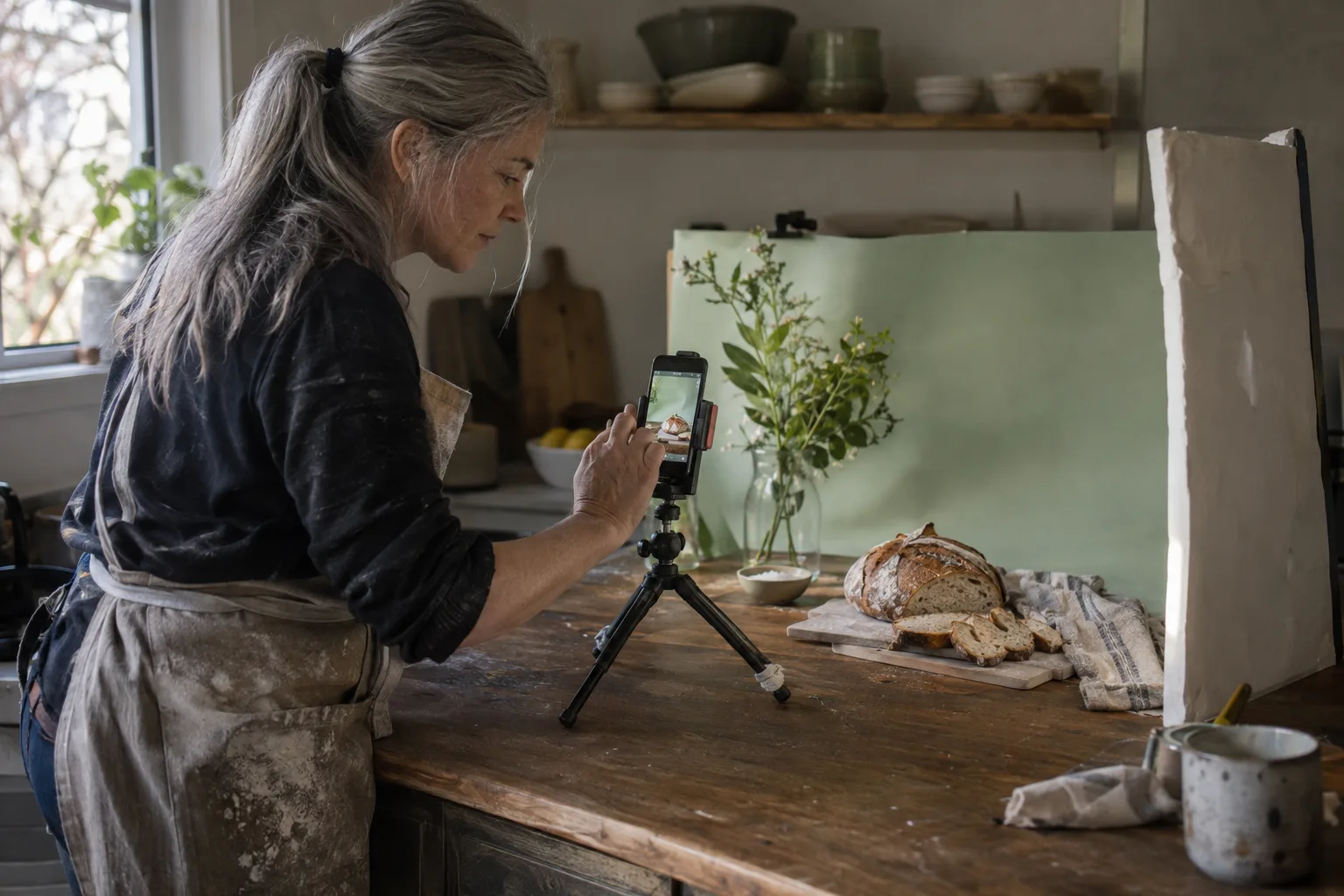
Founder photographing her bread on a phone tripod with a foam board reflector in her kitchen

Illustration

DIY PR mistakes that cost the most

  • Pitching the company, not a story. "We launched a new app" is an announcement. "Half of the workshops we measured overpay for power in winter" is a story.
  • Buying a list and sending to all of it. Off-beat pitches get ignored; the survey numbers are in how to pitch journalists.
  • Writing the pitch with AI. Most journalists object to AI-written pitches, as Qwoted vs Featured shows.
  • Following up three times. One follow-up with something new is enough.
  • Stopping after one month. Relationships with reporters build over several stories. Keep the routine for at least a quarter.

Why to start with trade and local press

National outlets get the most pitches and have the least room for an unknown company.

Trade titles and local business desks are read by the exact buyers you want, and a national reporter who later finds two trade pieces sees a company other editors already trusted. Our guide to PR for small business goes deeper on the local desk. Start the list with these.

  • the trade newsletter your customers read
  • the business section of your home city
  • the podcast your buyers mention in sales calls

What to do after your first story runs

One published story is proof for the next pitch. The full after-coverage routine is in the HARO guide.

  • Add the article to your newsroom page with the outlet and date.
  • Thank the reporter without asking for anything.
  • Write down which angle worked and plan the next one around it.
A cafe owner hanging a framed newspaper clipping on the wall
After coverageOne story wins the nextA framed clipping on the wall is for you. The link on your newsroom page is for the next reporter who checks you out.Illustration

Alternatives to hiring a PR agency

OptionMonthly priceBest for
DIYfreeone story, time to spare
DIY tools$29 to $99regular pitching by you
Freelancer$1,500 to $3,500one steady project
Managed plan with PR expertsfrom $390coverage without the retainer
Agency retainer$3,500 to $10,000large, ongoing programs

How to decide between DIY PR and paid help

DIY stops working when weeks of pitching bring no reply or a date cannot slip. Ask four questions.

Two or more yeses and paid help usually saves money in founder time.

  • Does the story have a fixed date, such as a funding round, that cannot slip.
  • Do the reporters who matter work in a country you have never pitched.
  • Have you pitched for eight weeks or more without a single reply.
  • Would three to four hours a week of your time be worth more in sales than in PR.
A bakery owner on a video call at the shop counter after closing
Two yeses, get helpPaid help costs least when it starts well before a fixed date, not in the week the date arrives.Compare the plansIllustration

What changes when we take it over

  1. Your story, found for you

    We read your data and the market news and turn them into two or three angles a reporter would actually run.

  2. Reporters picked by hand

    Each pitch goes to a short list of people who covered your topic in the last months, written for each of them.

  3. Your hours back

    You approve pitches and take the interviews. Everything else, from the reading to the follow-ups, is ours.

A first story in five weeks

A first story in five weeks without an agency, illustrative

Situation
A fictional Brno maker of heat pumps for small workshops had no budget for PR and no press contacts, but a year of anonymised energy data from 60 installations.
What we do
The founder turned the data into one finding about winter bills. Twelve reporters who had written about energy costs got a pitch by name, and twice a week the founder answered HARO requests on heating.
Outcome
Two trade newsletters and one regional business site asked for the full figures. The founder spent about three hours a week, and the data became the base for the next pitch.

Illustrative example, not a client result

Copy and send

A log for your weekly PR hours

Weekly PR hour log

Week of [date]
Reading and list work. [hours]
Writing pitches and answers. [hours]
Follow-ups and interviews. [hours]
Replies received. [number]
Stories published. [number and links]
Keep doing. [one line]
Stop doing. [one line]
Anastasiia Bratkova portrait

Anastasiia Bratkova

Chief Brand, Marketing & Communications Officer, RSE

Signs every pitch

About Anastasiia

Questions

What founders ask before going it alone

Can a startup get press coverage without a PR agency?

Yes. Many founders land their first stories with a personal pitch and free request services.

How do I get media coverage?

One provable story, ten reporters who cover it, and a personal pitch under 200 words. Follow up once.

How to get press coverage for free?

Pitch real news to the right reporter and answer HARO requests in your field. Both are free.

How to do PR for a startup?

Start with one story backed by a number, a short list of reporters who cover it, and a newsroom page with facts and photos. Pitch personally and repeat every month.

Does it cost money to do a press release?

Writing one is free. Paid wires charge per release, but a release alone rarely wins coverage. Direct pitches to reporters cost nothing.

When should I stop doing PR myself?

When it takes more hours than you can spare, or when a launch date cannot slip.

Sources

Next step

Get the DIY PR plan

A senior PR expert sends it within one business day, with a story angle for your company.

Write in Telegram